

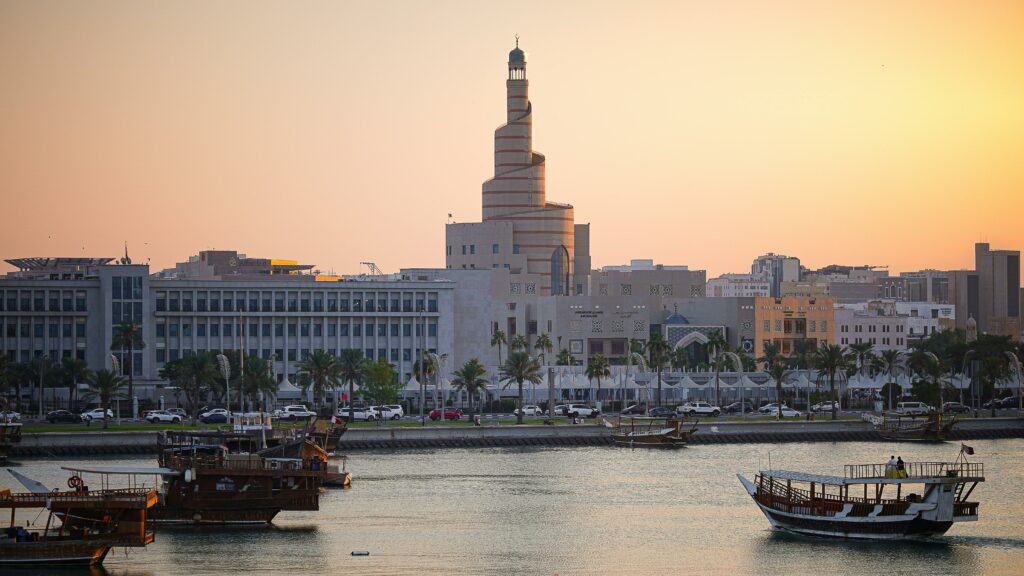

The Human Development Index (HDI) is a composite indicator that assesses a country’s level of human development, taking into account three key dimensions: health (life expectancy), education (literacy rate and years of schooling), and standard of living (gross national income per capita). Qatar, a small state in the Persian Gulf, has experienced impressive progress in human development, especially in recent decades.
Qatar ranks among the countries with very high human development, boasting one of the highest HDI scores in the world. According to the latest available data, Qatar consistently ranks among the top 20 countries with the highest HDI scores. This performance is due to several key factors:
Economy: Qatar benefits from vast natural gas reserves, making it one of the world’s wealthiest countries in terms of gross national income (GNI) per capita. This wealth has enabled the country to finance major infrastructure projects, modernize public services, and diversify its economy, all of which have contributed to improving the living standards of Qataris.
Education: Qatar has invested heavily in the education sector. Numerous reforms have been implemented to improve access to education, particularly for girls, who are now well integrated into the education system. Furthermore, the country attracts international educational institutions, such as Georgetown University and Northwestern University, which contribute to raising the overall academic level.
Healthcare: The Qatari healthcare system is one of the best in the Middle East, with modern hospitals and high-quality care. The country has invested in improving public health, preventive medicine, and access to advanced medical treatments, which has increased life expectancy and reduced infant mortality.
Infrastructure and Quality of Life: Qatar has experienced rapid urban development with the construction of modern buildings, high-quality roads, and infrastructure.
Challenges and Prospects: Despite its successes, Qatar faces challenges. Dependence on hydrocarbons remains a long-term vulnerability, although the country is seeking to diversify its economy with investments in finance, tourism, and education. Qatar must also ensure the inclusion of migrant workers in its human development policies, as they represent a large portion of the workforce.
Finally, environmental issues, particularly water management and reducing the carbon footprint, are growing priorities for the country to maintain its sustainable development.
Conclusion: Qatar is among the world leaders in human development, with high scores in all key areas. If the country continues on this path, while addressing internal and external challenges, it could maintain its high ranking in the HDI for years to come.
