

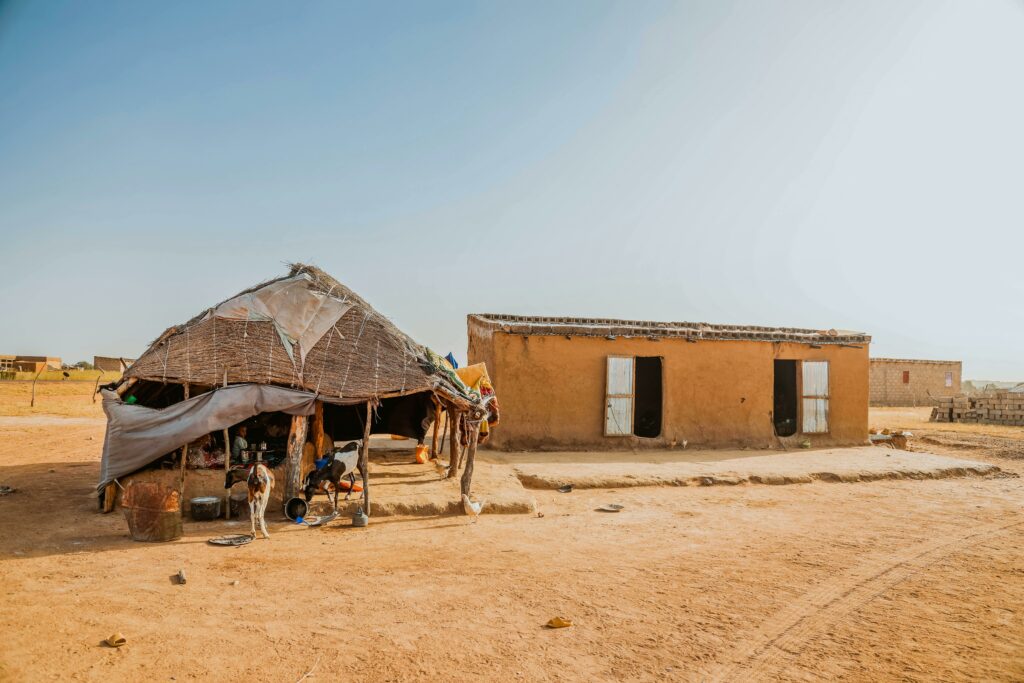

The **Human Development Index (HDI)** is a global indicator that measures a country’s progress through three key dimensions: **health** (measured by life expectancy), **education** (level of instruction and schooling rates), and **standard of living** (gross national income per capita). Regarding Mauritania, a West African nation, the HDI reflects the complex challenges it faces in economic, social, and institutional development. Despite progress in certain spheres, Mauritania remains a country with a relatively low HDI, ranking in the **Medium Human Development** category.
### **1. Evolution of the HDI in Mauritania**
Mauritania has seen improvements in its HDI over the years, but progress remains slow. Political transitions in the late 2000s, the development of specific economic sectors, and improved access to basic services contributed to a slight increase. However, the country faces significant structural challenges:
* **Persistent Poverty:** Approximately **25%** of the population still lives below the poverty line.
* **Climate Vulnerability:** Recurrent droughts and desertification threaten rural livelihoods.
* **Social Exclusion:** According to UNDP data, while the score is rising, Mauritania remains low compared to many other African nations due to the marginalization of specific groups.
### **2. Education in Mauritania**
Education has seen growth, but it remains a vulnerable sector. While primary schooling is now widely accessible, regional and social disparities persist.
* **Literacy:** The adult literacy rate is approximately **53%**, which is low compared to the global average.
* **Gender and Social Gaps:** Girls, particularly in rural areas, often leave school prematurely due to social pressures.
* **Marginalized Communities:** Access to quality education is significantly lower for nomadic groups and the **Haratines** (descendants of enslaved people), who face systemic barriers to equal opportunity.
### **3. Healthcare in Mauritania**
The health sector has progressed, with life expectancy rising to approximately **65 years**. However, this remains lower than many regional neighbors.
* **Infrastructure Gap:** Healthcare is concentrated in the capital, **Nouakchott**. Outside major cities, services are extremely limited.
* **Disease Burden:** The country faces a “double burden” of infectious diseases (malaria, tuberculosis) and rising non-communicable diseases (diabetes, cardiovascular issues).
* **Maternal and Child Health:** Infant mortality remains high at roughly **51 deaths per 1,000 live births**. Malnutrition is a major concern, particularly for pregnant women and children in rural “adwaba” (settlements).
### **4. Standard of Living and the Mauritanian Economy**
The economy is heavily dependent on natural resources, making it vulnerable to global price fluctuations.
* **Key Sectors:** Iron ore, gold, oil, and fishing.
* **Labor Market:** Unemployment is a major challenge, especially for university graduates and young women. The informal sector accounts for a vast portion of economic activity.
* **Rural Disparities:** Rural regions often lack essential services like potable water and electricity, further deepening the inequality gap between the coast and the interior.
### **5. Social and Political Challenges**
Mauritania faces deep-seated social issues that complicate human development:
* **Slavery and its Legacy:** Although officially abolished in 1981 and criminalized later, vestigial practices and the legacy of caste-based discrimination against the **Haratine** community persist.
* **Ethnic Tensions:** Friction between the Arab-Berber (Beidane) population and Afro-Mauritanian ethnic groups sometimes impacts social cohesion and equitable resource distribution.
* **Governance:** Challenges remain regarding freedom of the press, political opposition, and the fight against corruption, all of which hinder inclusive development.
—
### **Conclusion**
Mauritania continues to face major hurdles in human development. While education and health show signs of improvement, the country is held back by gender inequality, regional disparities, and a vulnerable economic base. To improve its HDI, Mauritania must intensify efforts in **diversifying its economy**, **ensuring social justice** for marginalized groups, and **expanding healthcare access** to its most remote populations. Political stability and institutional transparency will be the essential pillars for a truly inclusive and sustainable future.
