

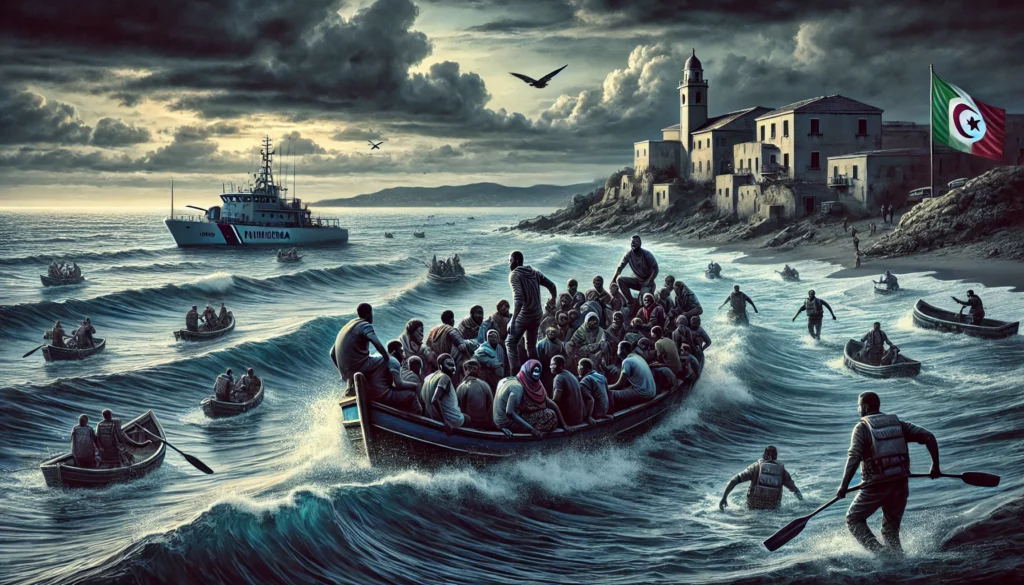

Tunisia has become a primary hub for irregular migration in the Central Mediterranean. Both Tunisians and an increasing number of migrants from Sub-Saharan Africa and the MENA region (Middle East and North Africa) use the country as a departure point. Here is a report supported by recent figures to understand this phenomenon.
1. Key Data on Migrant Flows (2023-2024)
Arrivals in Italy:
In 2023, approximately 130,000 migrants reached Italian coasts via the Central Mediterranean, an increase compared to 2022. According to the Italian Ministry of the Interior, nearly 30 percent of these departures originated from Tunisian shores.
Main Nationalities:
Sub-Saharan migrants represent a growing share. The most recorded nationalities include:
Ivory Coast: 18 percent
Guinea: 16 percent
Cameroon: 9 percent
Senegal: 8 percent
MENA Migrants:
While Sub-Saharan flows dominate, migrants from Syria, Egypt, and Algeria are also present in the crossings, though their proportion remains lower than those from Sub-Saharan Africa.
2. Factors Explaining the Increase in Sub-Saharan Flows via Tunisia
Restrictions in Morocco and Libya:
Stricter policies in Morocco and the dangerous security situation in Libya have pushed Sub-Saharan migrants to choose Tunisia as an alternative transit point.
Lack of Clear Migration Regulation in Tunisia:
Tunisia lacks adapted policies to manage migration flows, leaving many migrants stranded and at the mercy of smugglers.
Discrimination and Social Tensions:
Sub-Saharan migrants in Tunisia often face discrimination, which incentivizes them to attempt the sea crossing toward Europe.
3. Maritime Tragedies and Interceptions
Human Toll:
In 2023, more than 2,500 deaths were recorded in the Central Mediterranean according to the IOM (International Organization for Migration). A significant number involved departures from Tunisia.
Interceptions:
The Tunisian National Guard intercepted approximately 38,000 migrants at sea during the same year, a record figure compared to 2022.
4. Responses from Tunisia and Europe
Tunisia-EU Cooperation:
In July 2023, an agreement was signed between Tunisia and the European Union, including 105 million euros in financial support to strengthen Tunisian border controls and combat smuggling networks.
Direct Aid to Migrants:
International NGOs report a lack of humanitarian support for Sub-Saharan migrants stranded in Tunisia, who are often left to fend for themselves.
5. Profile of Migrants: Young and Desperate
Average Age: The majority of migrants are between 20 and 35 years old. Many are young graduates or workers seeking economic opportunities.
Women and Children: A growing proportion of women and children has been observed among Sub-Saharans, increasing the humanitarian risks.
6. Conclusion: A Multidimensional Crisis
Irregular immigration via Tunisia continues to grow, driven by complex economic, political, and social factors. The pressure on host countries, particularly Italy, highlights the need for a global approach combining:
Economic development in countries of origin.
Effective migration management in Tunisia.
A European response based on solidarity and human rights.
