

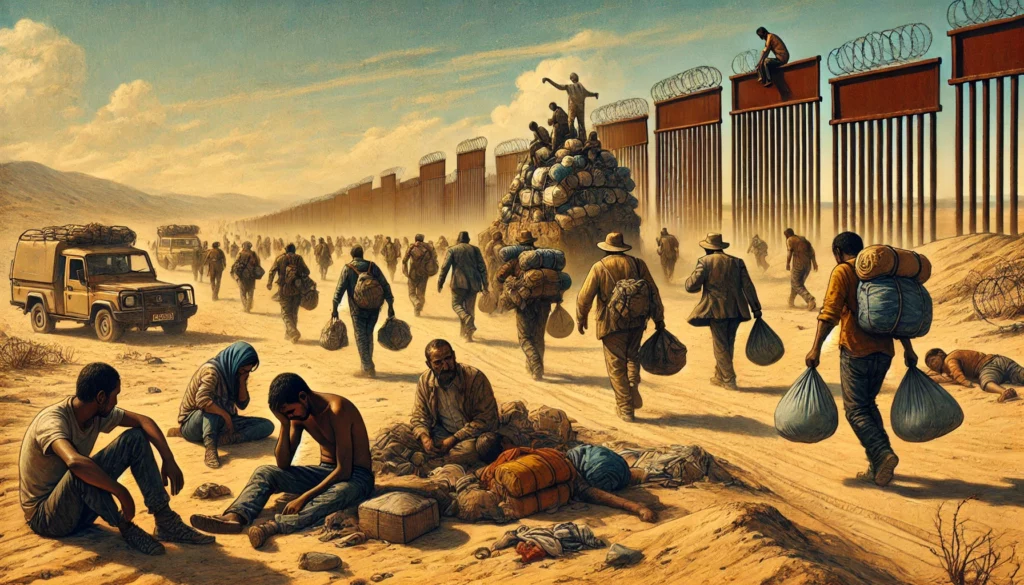

Irregular immigration is a major international challenge driven by wars, poverty, and climate change. Here are the key statistics and facts regarding this phenomenon worldwide:
Global Data and Figures
International Migrant Population: Totaled approximately 272 million people in 2020. The UN estimates that 10 to 15 percent are in an irregular situation, representing between 27 and 40 million people.
The Mediterranean Route: Over 26,000 deaths or disappearances have been recorded since 2014, making it one of the deadliest paths in the world. In 2023 alone, over 2,300 migrants perished while attempting to reach Europe.
US-Mexico Border: More than 2.7 million illegal crossing attempts were recorded in 2022, with a record high of 853 reported deaths in the same year.
Sub-Saharan Africa: Irregular migration accounts for roughly 80 percent of regional migration movements, fueled by smuggling networks in the Sahara Desert.
Southeast Asia: Hundreds of thousands of Rohingyas flee Myanmar annually toward Malaysia, Thailand, and Bangladesh, often falling victim to human trafficking networks.
Climate Change: World Bank reports indicate that 21.6 million people are displaced annually for climate-related reasons, threatening to increase irregular migration flows in the future.
Smuggling Costs: The cost of crossing a border ranges between 2,000 and 10,000 USD, and can reach up to 20,000 USD for complex routes between Africa and Europe.
Primary Migration Routes
Central Mediterranean Route: From Libya and Tunisia toward Italy and Lampedusa.
Darien Gap: A deadly jungle passage connecting South America to Central America.
Sahara Desert: A transit corridor for Sub-Saharan migrants heading toward North Africa.
Andaman Sea: The route for Rohingyas and Bangladeshis toward Malaysia and Indonesia.
Policies of Host Countries
US Border Wall: Spans 3,200 kilometers to reduce illegal crossings.
European Union: Recorded 330,000 irregular crossings in 2022 and relies on agreements with countries like Turkey to limit flows.
Australia: Maintains a strict policy of intercepting and turning back migrant boats at sea.
Proposed Solutions
Combating Smuggling: Migrant smuggling generates profits of up to 10 billion USD annually for criminal networks.
Economic Development: 78 percent of irregular migrants flee poverty, requiring real investment in countries of origin.
Providing Legal Channels: Enhancing legal migration quotas to avoid the use of deadly routes.
Conclusion
Behind every figure in these statistics is a human story of suffering and hope for a better life. This requires urgent international cooperation that balances security concerns with the respect for human rights.
