

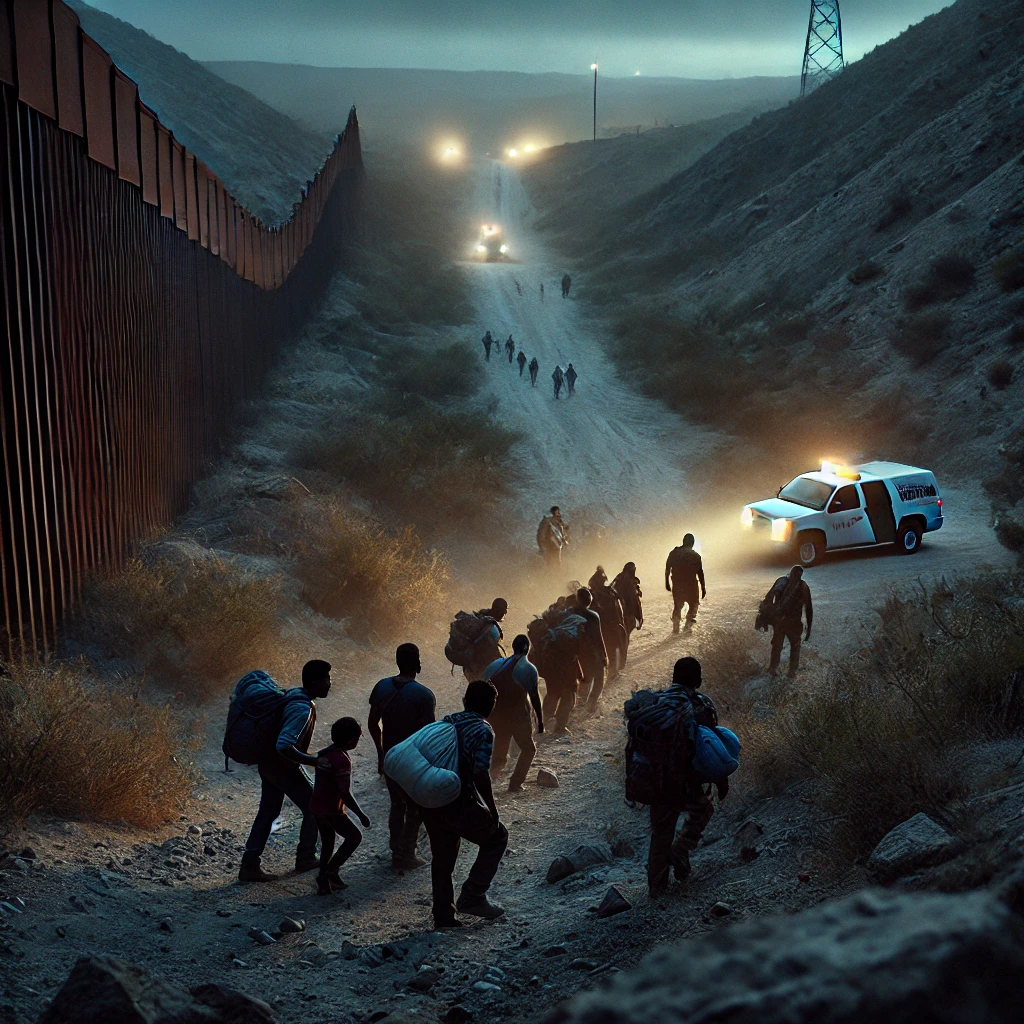

The Mexico-United States border, stretching nearly 3,200 kilometers, is one of the most heavily monitored zones in the world. Extending from the Gulf of Mexico to the Pacific Ocean, it crosses diverse landscapes from arid deserts to mountainous valleys. This border represents both a dream of opportunity and a life-threatening challenge for thousands seeking a better life in the United States.
Motivations of Migrants
The reasons driving migrants to cross this border clandestinely are varied:
Economic Factors: Many flee poverty and high unemployment rates in their home countries.
Violence and Insecurity: Regions in Mexico and Central America are plagued by drug cartels and criminal violence.
Family Reunification: Individuals often attempt the journey to join relatives already established in the U.S.
Climate Change: Environmental degradation of agricultural lands forces many farming families to migrate.
Dangers of the Crossing
Attempting a clandestine crossing involves considerable risks:
Extreme Natural Conditions: Migrants traverse desert areas where temperatures can soar to 50°C during the day and drop to freezing levels at night.
Exploitation: Many fall victim to smugglers, known as coyotes, who frequently abandon them in treacherous terrain.
Violence: Assaults and robberies are common occurrences along the migration routes.
Increased Surveillance: U.S. authorities have deployed advanced security measures, including drones, motion sensors, and intensified border patrols.
Consequences
Irregular immigration has profound social, economic, and political repercussions:
For Migrants: Many who are apprehended by authorities face immediate deportation to their countries of origin.
For Families: Family separations are frequent, particularly concerning unaccompanied migrant children.
Political Impact: This issue deeply divides American public opinion, fueling ongoing debates over immigration reform.
Potential Initiatives and Solutions
To address this humanitarian crisis, several solutions are being considered:
Legislative Reforms: Adopting laws that offer clearer, legal pathways for immigration.
International Cooperation: Implementing economic development programs in countries of origin to reduce the root causes of migration.
Strengthening Human Rights: Providing humanitarian assistance to migrants in distress.
Clandestine immigration at the Mexico-U.S. border is a complex issue reflecting global inequalities. A cooperative and humanitarian approach is essential to address the challenges posed by this reality.
